A tale of joy, despite medical woes
The Southampton Press, Sophie Griffin on Aug 5, 2021
In her book “My Pilot: A Story of Love, War and ALS,” Sarajane Giere tells the story of her relationship with her husband, Colonel Bernard (“Bernie”) D. Giere, a fighter pilot who served in the Vietnam War and spent 25 years in the Air National Guard’s 106th Rescue Wing in Westhampton Beach, which he commanded at one point.
Told through vignettes, the book illuminates the struggles of being a military wife and the joy the two shared in their marriage. After Col. Giere died from complications from ALS, Ms. Giere penned the memoir.
The couple met when they were both attending Coe College in Cedar Rapids, Iowa. Col. Giere, who was from Chicago, was a half-year ahead of her, and in the Air Force ROTC.
“It was sort of a blind date … My sorority sister [said], ‘Well, why don’t you go out with Bernie?’ And it just really worked,” Ms. Giere said. “We fell in love. We met in the fall and we wanted to get married by December. I mean, when I looked at my diaries and my letters, I thought, ‘Oh my goodness, it didn’t happen that fast,’ but it did.”
Ms. Giere took a job at a local telephone company and supported herself and Col. Giere as he finished up college, graduating in ’62. She would go on later to finish her undergraduate degree and get a master’s.
“We lived in Cedar Rapids, and they’re very hard winters, in a little tiny apartment in the third story of an old house,” Ms. Giere related. “We were just very happy. He graduated as a second lieutenant from the ROTC and they taught him to fly at the little airport there in Cedar Rapids; he started off in a tri-pacer.”
In the ROTC, Col. Giere discovered a love for flying and airplanes. Post-graduation, the Air Force sent the Gieres to West Texas, then Tampa, Florida, for more training, and Col. Giere flew F-4 Phantoms and other jets. Eventually, he was sent to Vietnam, where he spent a year flying combat missions.
Back state-side, Ms. Giere was raising their children and pursuing painting — a flight surgeon’s wife who was a well-known portrait painter gave her lessons. She’d go to the beach with other military wives and children and commiserate about the difficulties they faced. The solidarity with other women who understood helped her get through it all.
After the war, they moved to New York and spent 40 years living on Long Island. Col. Giere was the commander at the 106th Air National Guard Base in Westhampton Beach, and Ms. Giere worked in the Riverhead School District for a time.
“I would find myself in a computer room with dozens of computers, so I started writing these essays during lunch,” Ms. Giere remembered. “One of my colleagues said, ‘Why don’t you send this off to the Christian Science Monitor?’ Well, they published it, and that kind of did it … I went on to publish some essays in the New York Times, and [then] someone recommended the writer’s group at Ashawagh Hall, so I would drive out from East Quogue there every Tuesday night, even in the summer when it was hotter than heck.”
Ms. Giere continued to write, going to Bread Loaf in Middlebury and eventually writing a book about her mother’s family in Minnesota. She started to work on a piece about her husband’s family, who were German immigrants.
“After [Bernie] came back from Vietnam, I’d been writing little, short essays about moments of my life that just stuck with me, little touchstones from my life that I couldn’t forget. I told him two years before he died — [when] he was 72, he was diagnosed with ALS — now I want to write about the Gieres and your family … And I said, ‘And you are part of the story.’ So I would start taking dictation when we ate dinner.”
A few years later, after Col. Giere died and Ms. Giere moved, she went back through the letters the couple had exchanged while Col. Giere was away, stationed in Vietnam. The letters spoke to her, and she decided to make them the focus of a book rather than simply including them in a larger tale of the Giere family.
“I’d read them a lot, but I read them again when he was gone and I saw the nuanced writing style, the personality that came through, was just powerful,” Ms. Giere recalled. “So this is our story of 52 years of marriage. It resonated so much in me that I wanted to share what a wonderful guy he was with my family. Now, I have a great granddaughter and I can see ones are coming along, and they won’t know a thing unless I tell them. I want to proudly tell them what a wonderful man he was.”
As she was writing, Ms. Giere would put on the music of the ’50s and ’60s that she and Col. Giere had listened to and return to the memories she had together. Reliving the days they had spent together was hard, yet healing. One of the emotionally difficult things she wrote about occurred in 1978, when Col. Giere was commander of the Air National Guard in Westhampton Beach.
“One of our rescue helicopters crashed into a mountain upstate,” Ms. Giere said. “He was a commander and these were people that we knew and their wives. In one chapter, I relate how difficult it was, because I went along with him and the squadron commander. We had to go to two wives’ homes and tell them [their husbands died]. And that was so hard, it was so hard. And then in the cemetery, [when] they brought the seven bodies back and the governor was at the base out in Westhampton and Col. Giere was there, shaking hands … That was very difficult for me because I was so close to it.”
In the last years of Col. Giere’s life, he was diagnosed with ALS.
“The thing that got me through was the ALS Ride for Life organization, out on the East End,” Ms. Giere said. “Christopher and Christine Pendergast began it … Christine started caregivers meetings, and [they] really saved my life. Here I was in a room with these people that were helping each other. Some of them had children who were affected. It could have been a brother, a husband, a wife. You learn from one another, and that really helped me because I had somebody to go to for support.”
Ms. Giere will be donating all the proceeds from her book to ALS Ride for Life, to support the organization that helped her and her husband so much.
Reflecting on the memoir process, Ms. Giere emphasized the importance of resilience.
“Looking back on [writing My Pilot] and thinking about what I learned from doing it, I think I learned that I had more strength that I knew I had. And I think it came from the adversity I went through. It’s a learning experience. I mean, the feedback I’ve received from people that have read my book surprised me. It thrills me that what I could say could help other people, who could relate it to their own lives. It became kind of a healing for me to know that something I wrote could help other people.”




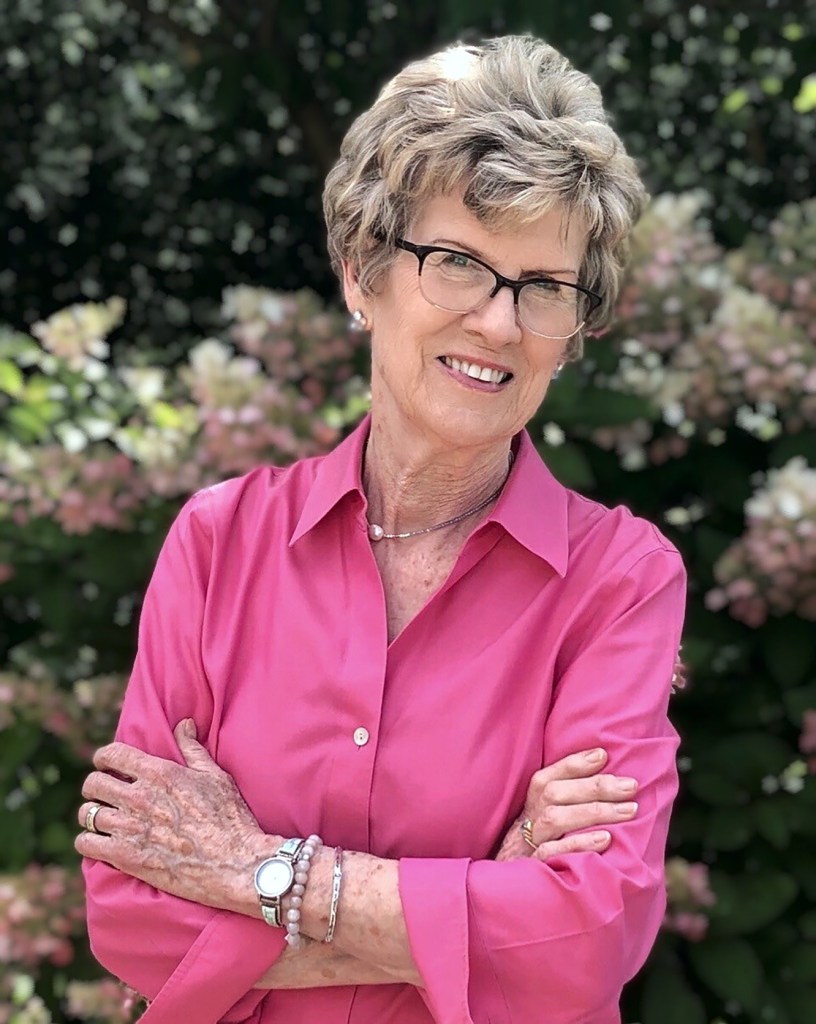



 Sarajane Giere