
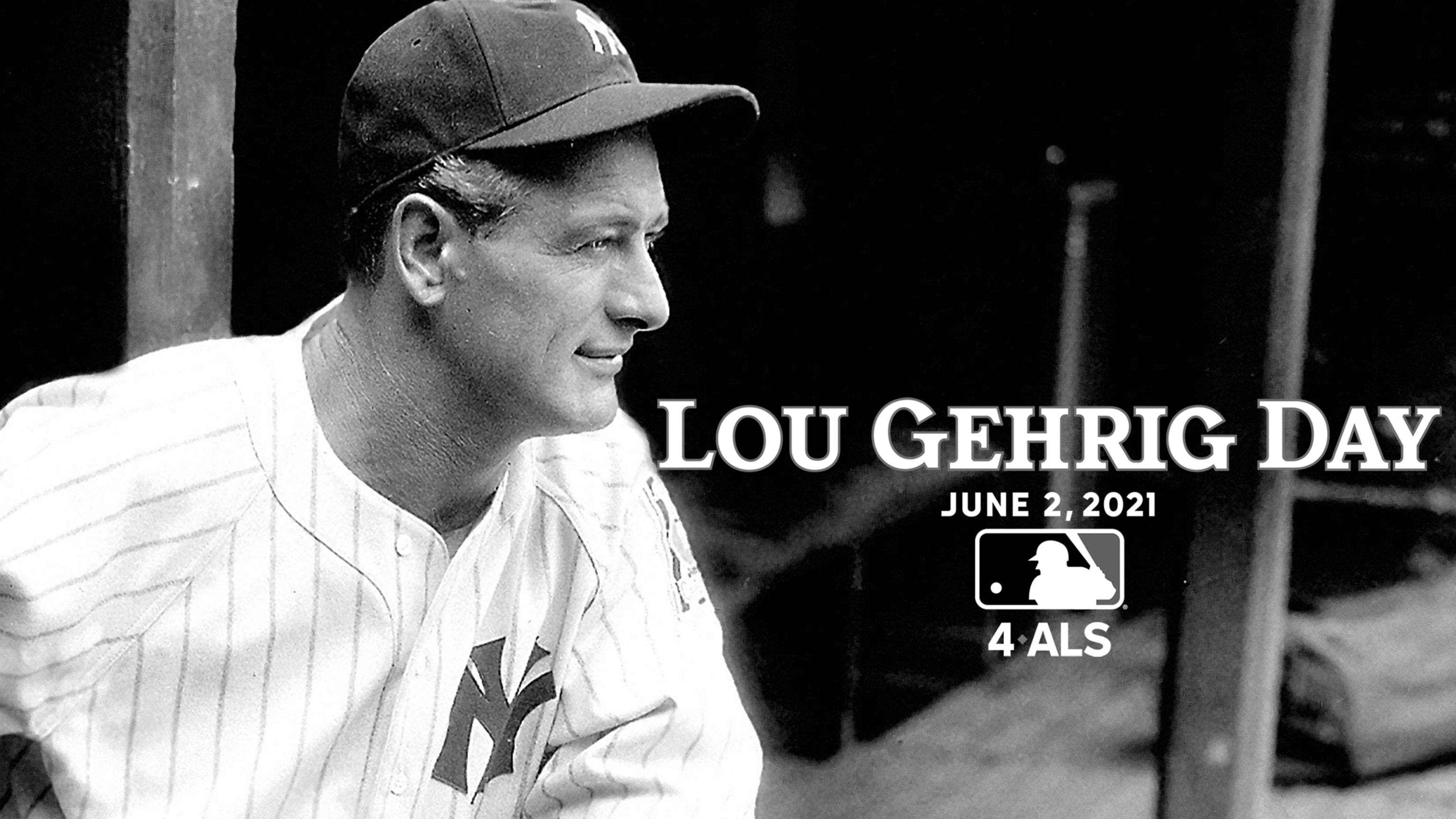
Lou Gehrig, the former New York Yankee baseball great known as the Iron Horse, has been linked to ALS {amyotrophic lateral sclerosis} ever since he was diagnosed with the incurable disease 84 years ago. The progressive, debilitating disorder forced the 37-year-old baseball legend to leave his beloved sport, and he died two years later. From then on, ALS, the rare disease most people had never heard of, became known as Lou Gehrig disease.
The 62,000 fans gathered at Yankee Stadium on July 4, 1939, looked down on the field where their embarrassed hero was receiving honors from his peers and coaches. Visibly humbled and overcome with emotion, Gehrig was prodded by his coach to get behind the mic and say something to the crowd. He began his talk by saying: Fans, for the past two weeks you have been reading about the bad break I got. Today, I consider myself the luckiest man alive on the face of the earth.
Little did Lou know that his heartbreaking speech would consist of two of the most often quoted sentences in the history of baseball. After that opening, Lou went on to enumerate his many blessings which earned him a respect that still lives today.
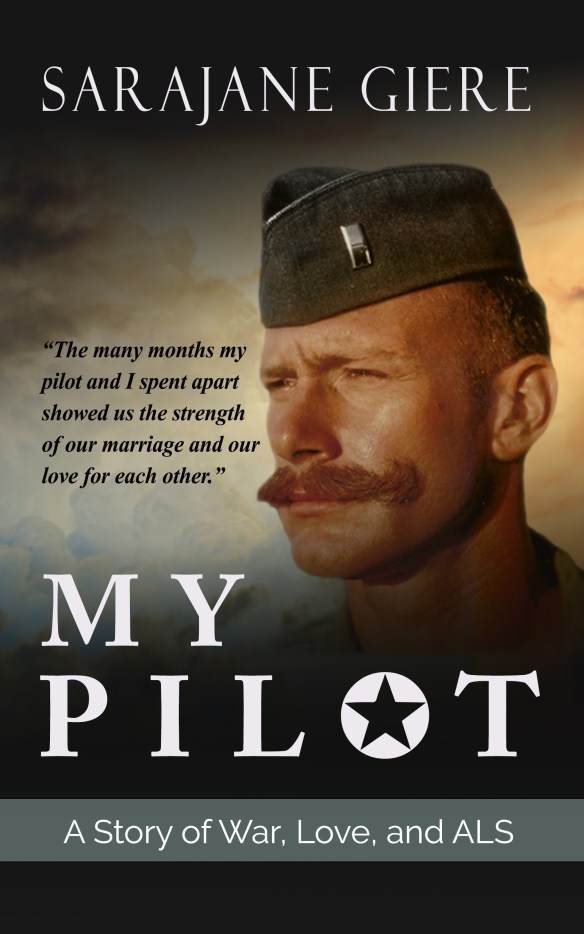
I’ve always admired Gehrig’s courage in facing the inevitable, but I never imagined my husband would be facing that exact verdict. When Bernie was told he had ALS in 2012, his reply was, “It is what it is.” He was 74 then, and had only two years left; ALS’s life expectancy is 2-5 years on the average. Bernie never unlocked his personal life to others, except in rare instances or when recounting his narrow escapes as a fighter pilot during the Vietnam War before an audience of history students or Legionnaires. During his last several years, we lived life to the fullest, traveling, spending precious time with our children and grandchildren, and feeling grateful for the many blessings we had during our 54 years of loving each other.
After reading my book, My Pilot: A Story of War, Love and ALS, my friend, Betsy, told me about her brother Ed, who had died of ALS while in his early 70s. He was a retired business man, who’d served in WW II was married and had three children, five grandchildren and one great-grandchild. Betsey wanted me to read his two-page typed letter which talked about his diagnosis and his reactions to it. I noticed it was dated, 1991, which meant that Betsey had saved it for 30 years.
I lay the letter before me as I sat at my kitchen table, warming my hands around my fresh mug of coffee. I felt privileged my friend was sharing her brother’s words with me, but I had no idea what was in store.
Ed’s letter began, I was diagnosed as having ALS, Amyotrophic lateral sclerosis, known as Lou Gehrig’s Disease. He went on to describe how the nerves that connect the brain to the muscles die and the muscles atrophy, which sounded all too familiar to me. Ed explained that the disease was making itself known to him through his vocal cords, throat and mouth.
When Ed and his wife received the doctor’s diagnosis, their reaction was one of quiet introspection rather than emotion. Bernie and I felt the same way. Basically, Ed said, the doctor told me I am going to die. This can hardly be called surprising or startling information. We all are, or should be, aware of our own mortality. When destiny told me to pick a card, I could have done worse. Unlike Alzheimer’s, ALS does not affect the mind, and it does not involve pain.
His brutal honesty took me by surprise. As I continued reading his thoughts, my wish was that I had known this fine man. By the time I finished his letter, I felt as if I had. It’s one thing to be diagnosed with a curable malady, I thought, but another to be told there is no cure for you.
When Ed called himself, one of the world’s luckiest people, I wondered if most people would feel the same way under similar circumstances. What’s there to be thankful for? they could ask. In fact, I might have posed that question myself, had my husband been alive and healthy. I read on…
I stand in absolute awe of creation, Ed said. Beauty is all around us, the gentle music of a northern lake touching the shore, the perfect peacefulness of falling snow, the ultimate wonder of a sunset, and the wind in the high conifers make me feel I am on the verge of comprehending infinity. He added how he and his wife cherished every moment, and how they reveled in the pleasure of each other’s company. We count and are humbly grateful for our fortune and our many blessings.
By sincerely claiming and naming his past good fortunes—which probably unbeknownst to him, had his readers evaluating their own lives as they read on—Ed did us a favor by looking back and uncovering a mountain of treasures that he might have left along the way had he not been stricken.
I can imagine Bernie smiling at this question Ed posed: Can anyone be more fortunate than I, and wouldn’t I be a class idiot to let the fear of dying spoil the obvious pleasure I get from living? If Bernie were here, I believe he’d look upon Ed as a confidant whose words expressed his own feelings.
I’ve had the privilege of knowing memorable PALS—People with ALS—during my journey with Bernie. One remarkable man we came to know was Christopher Pendergast, who had ALS for 27 years, and wrote about it. His book, entitled Blink, was written with an eye-checker device on his computer screen because he could no longer use his hands. Others like Bernie, expressed their courage and daily accounts silently to themselves; day by day, week by week, month by month.
No matter how they handle their emotions, those who live with their endgame in sight have a lion’s courage, and the satisfaction of knowing what matters most in life.








 Sarajane Giere